
Design Notes · October 19, 2026
By the Diplomat Closet Design team · Meet the team
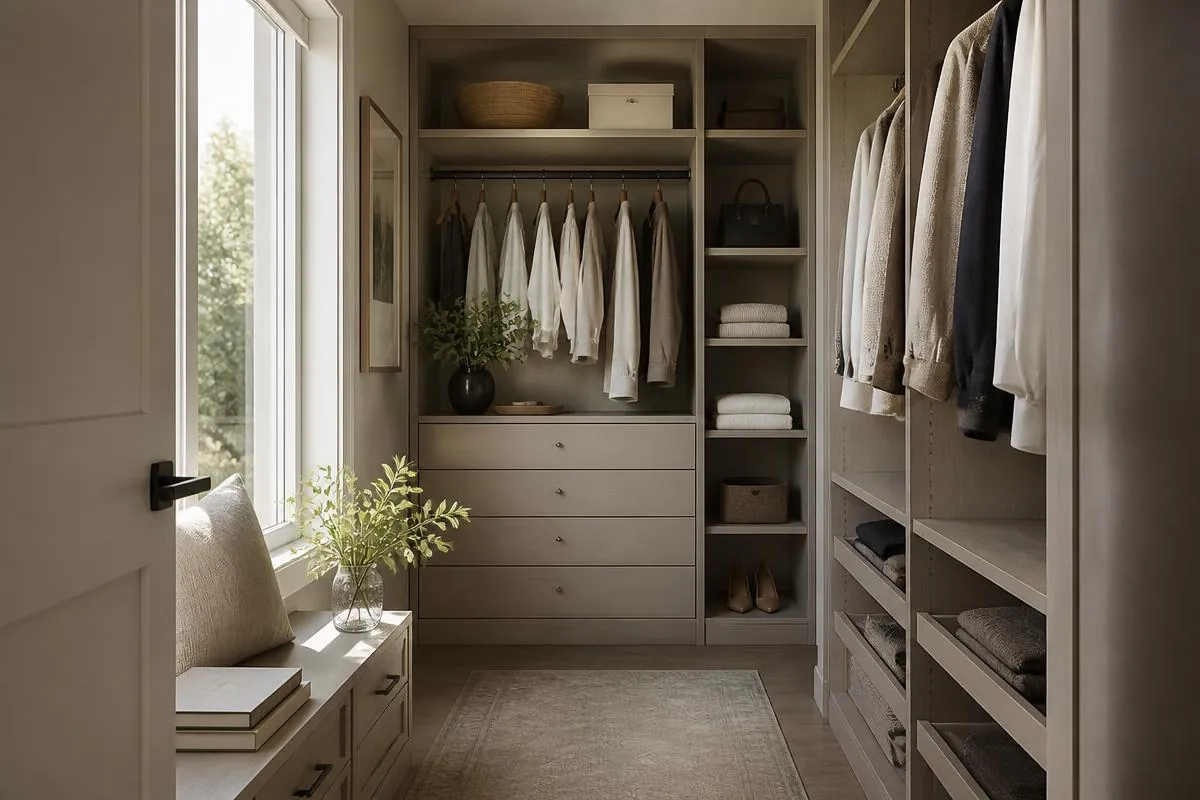
Warm, Natural, and Pastel Tones Are Changing What Custom Built-In Storage Can Look Like
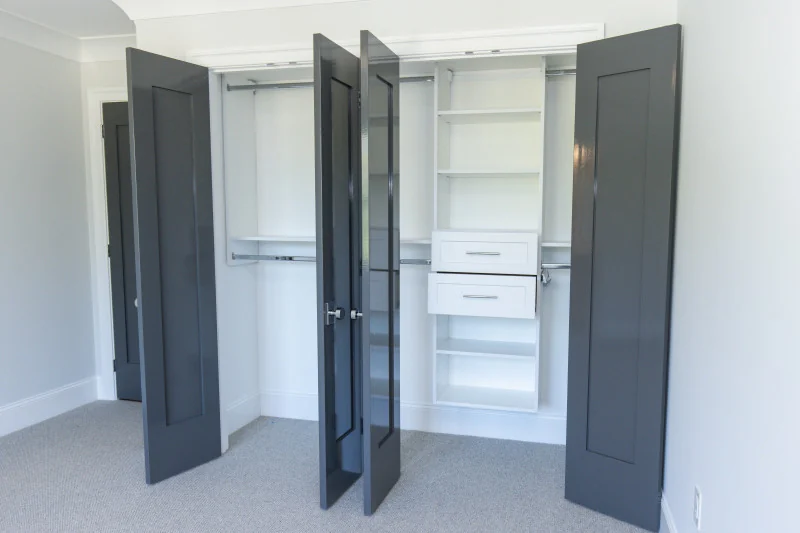
Your closet works. Sort of. It holds your things, it has shelves, and technically, nothing is on the floor. But every time you open the door, something feels slightly off – not broken, just flat. Like the space was designed for a generic version of you, not the actual one.
Color is usually the last thing people think about when redesigning a closet. It shouldn’t be.
Key Takeaways
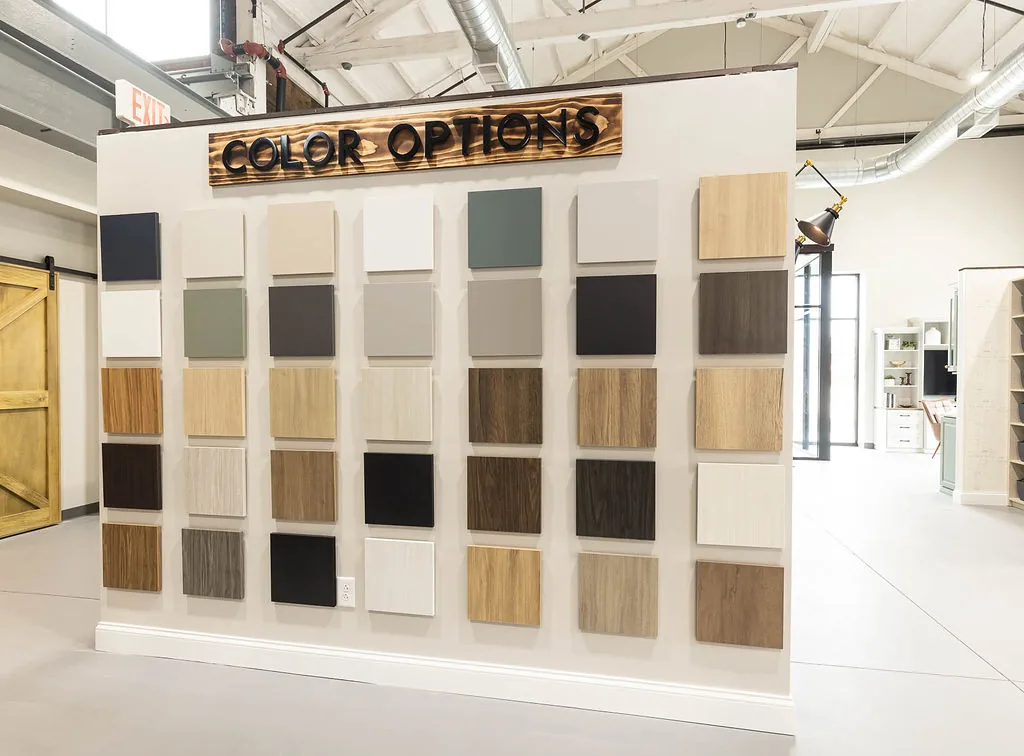
Rogue Valley Pear, Willow, and Mist are three distinct finishes that bring warmth, softness, and depth to custom built-in storage without feeling trendy or overdone.
Choosing a finish isn’t a cosmetic decision – it’s a structural one that shapes how the whole room reads.
Warm natural tones work best in spaces with existing wood elements or earthy palettes; pastels work best in rooms that already lean light and airy.
Custom built-in storage designed around a specific finish produces a more cohesive result than retrofitting color onto a pre-built system.
Diplomat Closet Design offers complimentary design consultations where you can see these finishes in person before committing to anything.
The short answer: Rogue Valley Pear, Willow, and Mist are three finish options now available through Diplomat Closet Design that expand the possibilities for custom built-in storage in your home. Rogue Valley Pear brings warmth through a natural wood grain. Willow and Mist introduce soft, cool-toned pastels. Together, they make it possible to design a closet, pantry, or home office that actually reflects how you live and what you love.
Why Does Finish Color Matter More Than Most People Realize?
Most homeowners spend the bulk of their closet design decisions on layout: how many shelves, where the hanging rods go, and whether there’s a drawer section. The finish gets chosen last, often under time pressure, from a limited palette.
That sequence is backward.
The finish is the first thing you see and the last thing you forget. It sets the emotional register of the entire space before you’ve noticed a single shelf. A warm wood grain makes a walk-in closet feel like a dressing room. A cool, soft pastel makes a pantry feel calm instead of chaotic. The layout is functional. The finish is personal.
This is the contrarian claim worth sitting with: you can have a perfectly organized closet that still feels wrong, and the reason is almost always the finish.
When Diplomat Closet Design works through the design process with a client, finish selection isn’t treated as a final checkbox. It’s part of the conversation from the beginning, because the color affects how the cabinetry reads against your flooring, your wall color, and the light in that specific room. You can explore how color choices shape the whole closet experience to understand why this decision deserves real attention.
What Is Rogue Valley Pear, and Who Is It For?
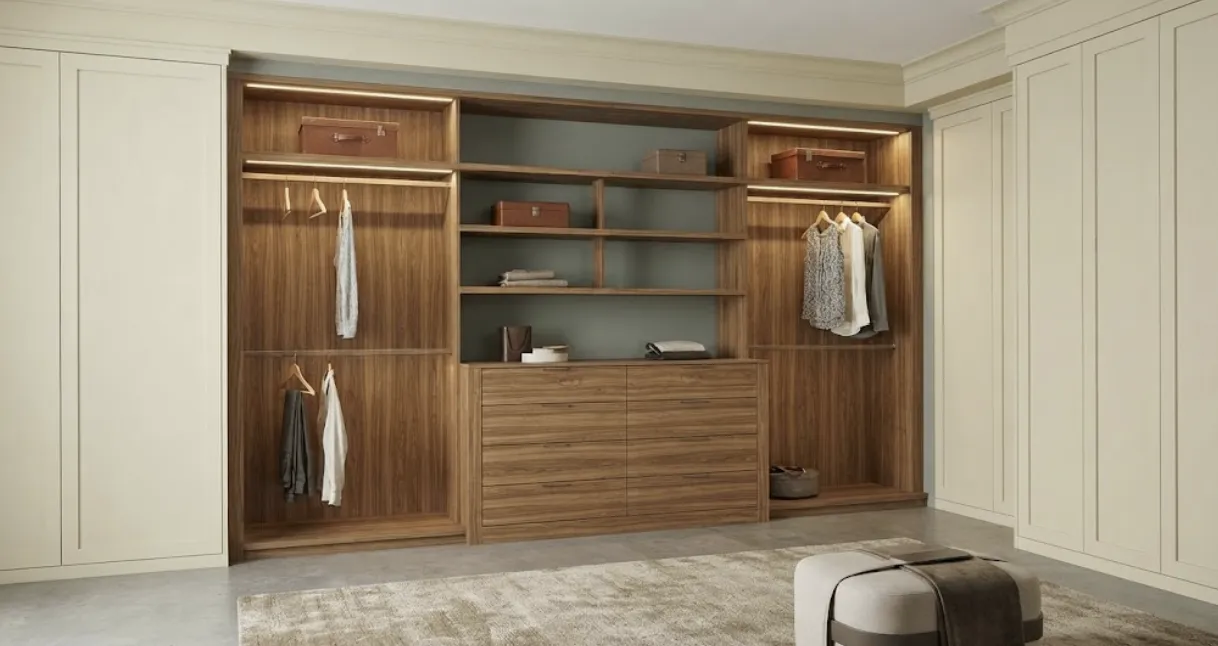
Rogue Valley Pear is a warm, wood-grain finish that mimics the natural variation and depth of real pear wood, without the maintenance or cost of solid hardwood.
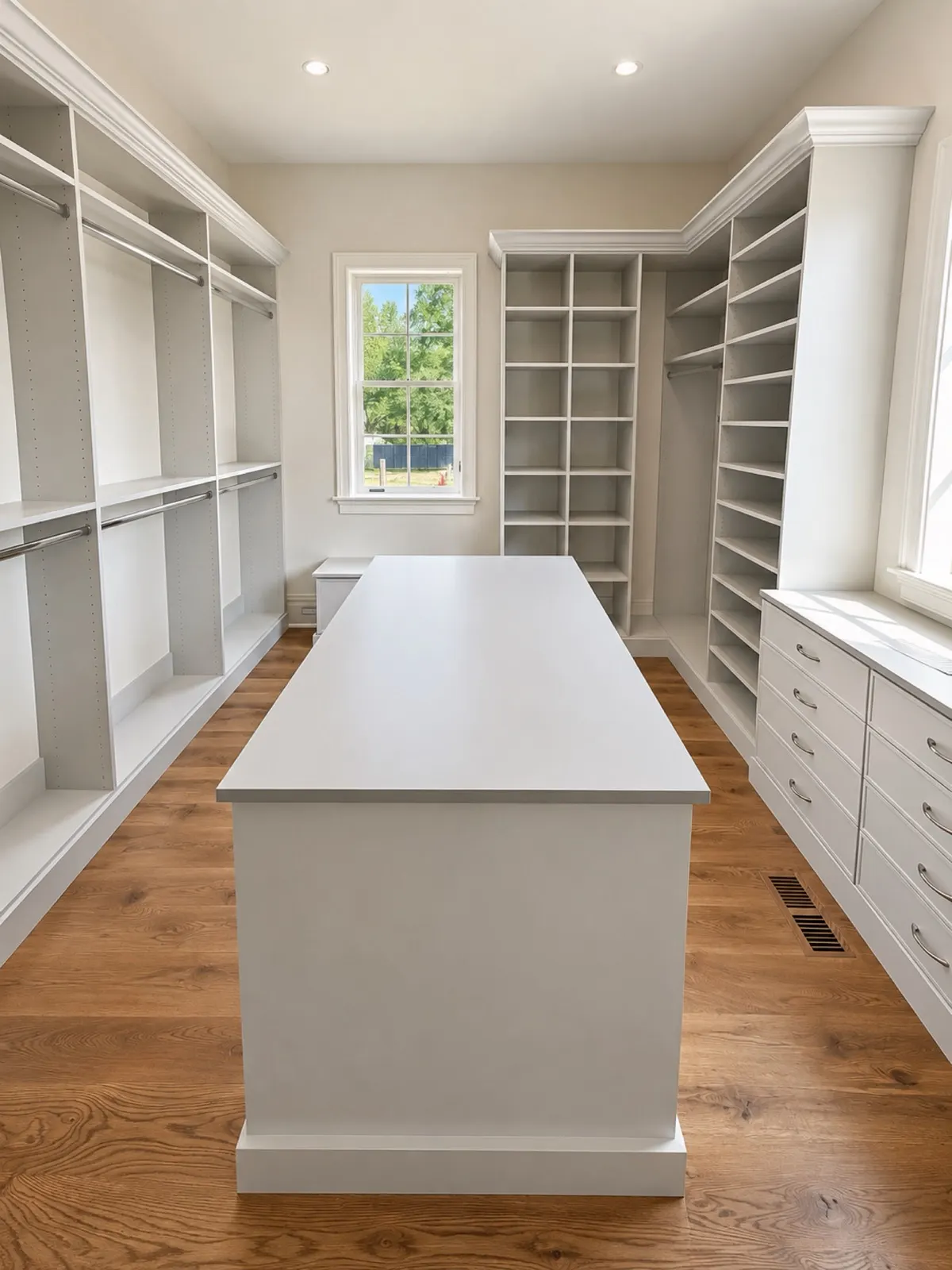
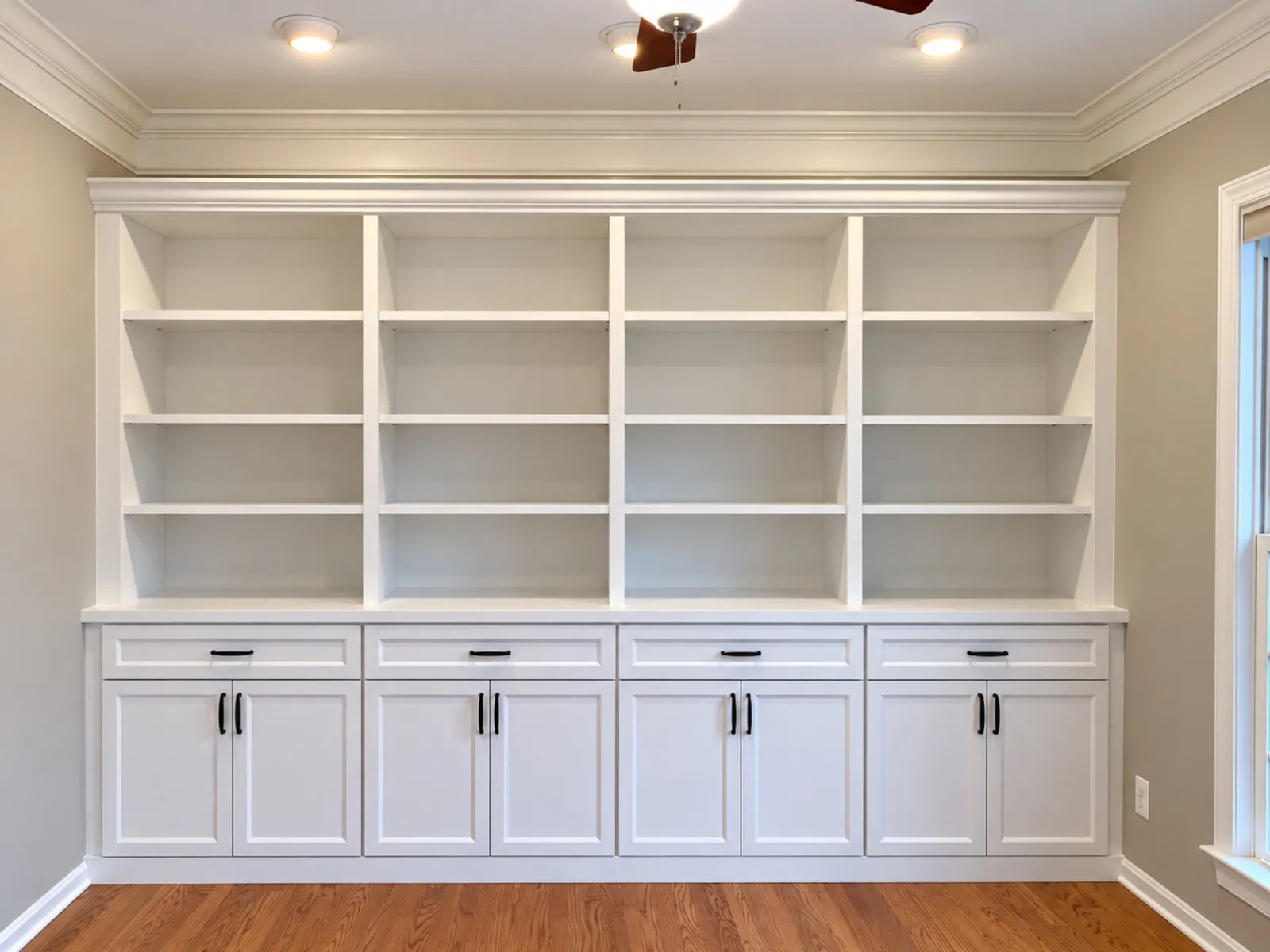
It’s the finish for people who want their closet to feel like furniture, not cabinetry. The grain pattern is subtle enough to work in a modern space but warm enough to anchor a more traditional or transitional interior. In a primary walk-in closet, it reads like a luxury dressing room. In a home office, it adds the kind of visual weight that makes built-in shelving look intentional rather than installed.
Consider a typical scenario: a homeowner in the Main Line area is redesigning a primary closet that connects to a bedroom with warm oak floors and cream walls. A white or gray finish would technically work, but it would sit in the space rather than belong to it. Rogue Valley Pear picks up the warmth of the flooring, creating a visual thread between the two rooms. The closet stops feeling like an addition and starts feeling like it was always there.
This finish pairs naturally with matte black hardware, brushed gold pulls, or warm bronze accents. It also works well alongside thoughtful closet lighting upgrades that bring out the grain’s depth rather than flattening it under cool overhead light.
What Makes Willow Different From a Standard White or Gray?
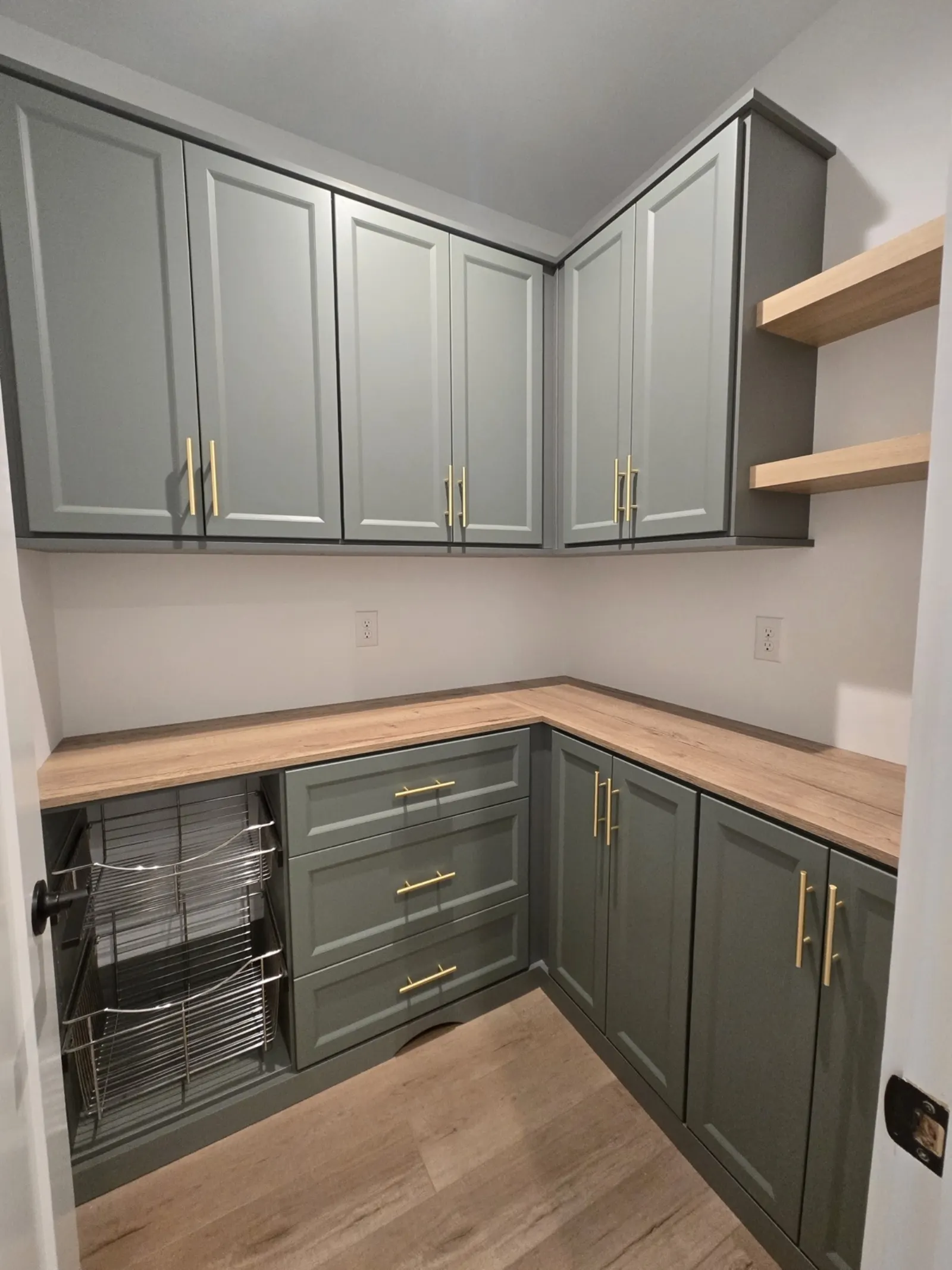
Willow is a soft, muted green-gray finish that sits in the space between a true pastel and a neutral, giving it unusual versatility.
It’s not mint. It’s not sage. It’s closer to the color of morning light on a pale wall – present without demanding attention. That quality makes it one of the more design-forward options in the palette while still being easy to live with over the long term.
Willow works especially well in spaces where you want the storage to recede slightly and let the objects inside become the visual focus. In a pantry, that means the shelving becomes a backdrop for your organized goods rather than competing with them. In a craft room or hobby space, it creates a calm, focused environment without feeling sterile. If you’re thinking through how to design a clutter-free craft room, Willow is worth putting at the top of your finish shortlist.
The finish also responds well to natural light. In a room with east- or south-facing windows, Willow stays slightly warmer during the morning hours and cools down in the afternoon. That responsiveness is part of what makes it feel alive rather than painted.
How Does Mist Work in a Custom Built-In Storage System?
Mist is a pale, cool-toned finish with a blue-white quality that reads differently depending on the light source and surrounding materials.
Where Willow leans green, Mist leans blue. It’s the finish that makes a laundry room feel spa-like or turns a secondary closet into something you actually enjoy using. In a nursery or children’s closet, it’s gentle without being saccharine. In a home office with custom built-in storage, it creates a focused, clear-headed atmosphere that warmer finishes don’t always achieve.
The practical design note here: Mist is more sensitive to the colors around it than Rogue Valley Pear or Willow. In a room with warm yellow or orange undertones in the walls or flooring, it can read slightly cold. In a room with white, gray, or cool-toned walls, it settles beautifully. That sensitivity isn’t a flaw – it just means the consultation stage matters more with this finish than with others.
Diplomat Closet Design’s 3D rendering process is particularly useful here. Seeing Mist in the actual context of your room’s proportions, wall color, and light conditions before anything is built removes the guesswork that makes finish selection feel like a gamble.
The Color Palette Framework: Matching Finish to Room and Life
The Color-to-Context Framework is a three-variable approach to finish selection: room function, existing palette, and light quality.
Use it this way:
Room function tells you the emotional register you’re designing for. A primary closet wants warmth and luxury. A home office wants clarity and focus. A pantry wants calm and order.
The existing palette tells you whether you need the finish to blend, contrast, or anchor. Rogue Valley Pear anchors. Willow blends. Mist contrasts gently.
Light quality tells you how the finish will behave across the day. Warm natural light amplifies Rogue Valley Pear. Cool or diffused light is ideal for Willow and Mist.
Use this framework when: you’re choosing between multiple finishes and can’t decide based on samples alone. Skip it when: you already have a clear design direction and just need confirmation – in that case, trust your instinct and verify it in a 3D rendering.
This is the step that separates a closet that photographs well from one that actually feels right every morning.
If you’re weighing how these finishes compare across different closet types, understanding the range of closet system options gives useful context for how finishes interact with structure.
How Do These Finishes Compare Side by Side?
| Finish | Tone | Best Room | Light Sensitivity | Pairs Well With |
|---|---|---|---|---|
| Rogue Valley Pear | Warm, wood grain | Primary closet, home office | Low – works in most light | Warm metals, dark hardware |
| Willow | Soft green-gray | Pantry, craft room, laundry | Medium – shifts with natural light | White walls, natural textures |
| Mist | Cool blue-white | Nursery, secondary closet, office | Higher – sensitive to warm surroundings | Cool-toned walls, chrome or nickel |
None of these is the “safe” choice. Each one is specific, which is exactly the point.
Generic closet systems default to white because white offends no one. It also moves no one. If you want a space that feels designed rather than installed, you have to make a real choice – and these three finishes are real choices.
If you’re ready to see how one of these finishes would actually look in your space, schedule a complimentary design consultation with Diplomat Closet Design and bring your room dimensions, photos, and any finish samples you’re already working with. The conversation is more productive when the context is specific.
Who Should Think Carefully Before Choosing a Pastel Finish?
Pastels aren’t for every space or every homeowner, and it’s worth being direct about that.
If your home has a very traditional or formal interior with dark wood tones, heavy molding, and rich jewel colors throughout, Willow and Mist will feel disconnected from the rest of the house. Rogue Valley Pear would be the stronger choice, or a deeper, more saturated custom color might serve the space better than any of these three.
If you’re designing storage for a space you’re planning to sell in the near term, a warm neutral or classic white may be the more broadly appealing option. That said, a well-designed custom built-in storage system adds real perceived value regardless of finish – the craftsmanship reads even when the color isn’t to every buyer’s taste.
The right finish is the one that fits your actual life in your actual home. Diplomat Closet Design’s process is built around that principle, not around steering you toward whatever’s easiest to install.
FAQ
How do I know which finish will actually look good in my specific room?
The most reliable way is to see a 3D rendering of your actual space with the finish applied. Diplomat Closet Design creates these as part of the design consultation process, so you’re not making a decision based on a small sample chip under showroom lighting. Room proportions, wall color, and natural light all change how a finish reads in practice.
Are these new finishes available for all types of custom built-in storage, or just closets?
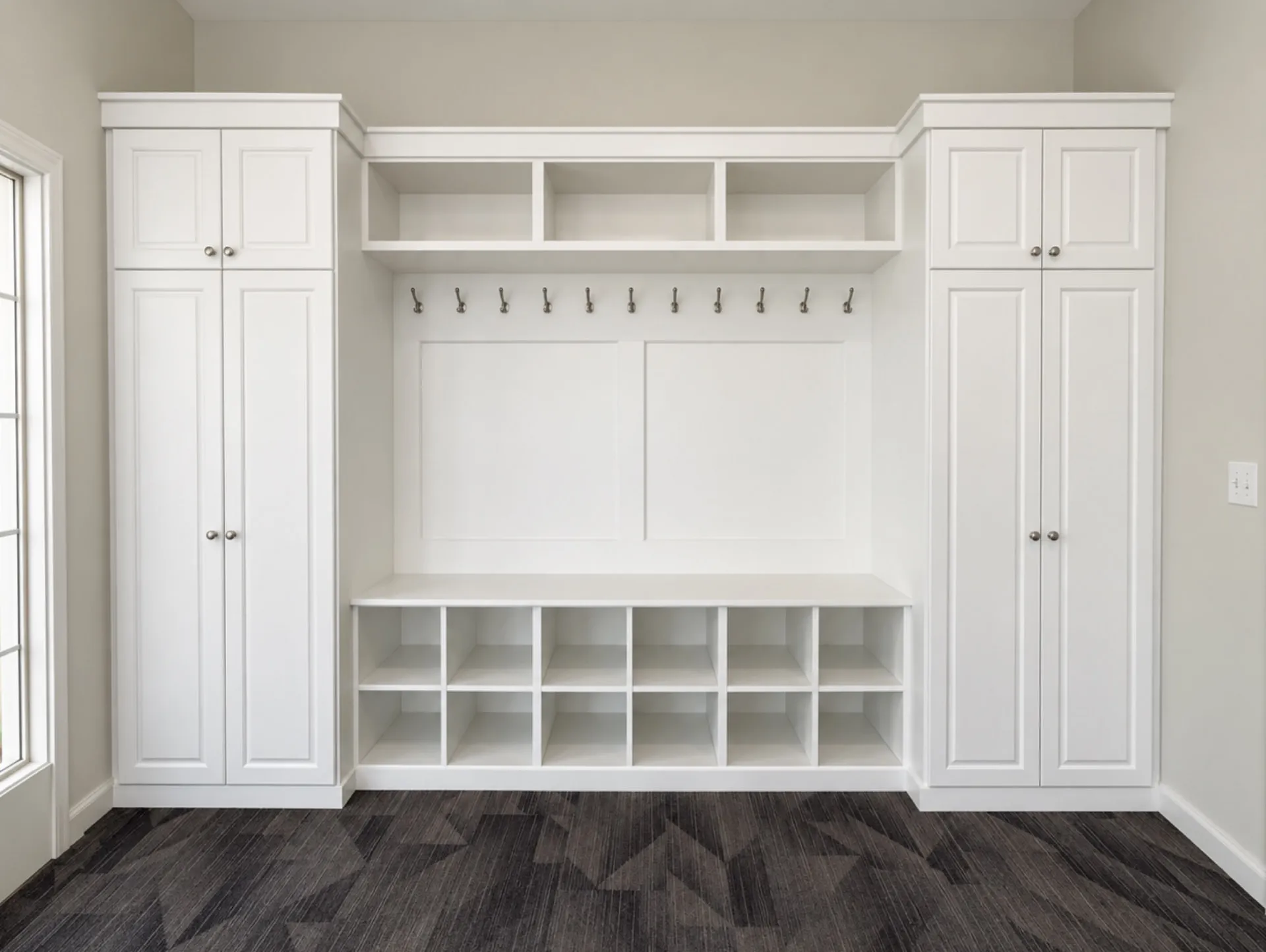
All three finishes can be applied across the full range of custom built-in storage projects, including pantries, home offices, laundry rooms, mudrooms, and garage storage systems. The finish choice is independent of the structure, so you’re not limited by project type.
Will a pastel finish look dated in a few years?
Soft, muted tones like Willow and Mist are grounded in the same color principles as classic neutrals – they’re not trend-driven pastels in the way that, say, millennial pink was. The muted quality is what gives them staying power. That said, any finish you love now is the right one for now, and custom cabinetry is built to last well beyond any single design moment.
Can I mix finishes within a single closet or storage system?
Yes, and it’s often a stronger design choice than a single finish throughout. A common approach is to use a wood grain like Rogue Valley Pear for the main cabinetry and a softer tone like Mist or Willow for open shelving sections. Diplomat Closet Design’s designers can show you how a two-finish system would read in your space before anything is built.
How does finish selection work during the design consultation?
The consultation includes reviewing finish samples in the context of your project goals, your existing interior palette, and the specific room. The 3D rendering then shows you how the chosen finish interacts with your actual space. You’re not committing to anything during that first conversation – it’s a design dialogue, not a sales pitch.
Does the finish affect the durability of the cabinetry?
The structural integrity of the cabinetry is determined by the materials and construction, not the finish. All three of these finishes are applied to furniture-grade materials built for daily use. The finish affects appearance and how the surface handles light; the underlying build quality is consistent across the palette.
I’ve tried organizing my closet with store-bought systems before and it never sticks. Why would custom be different?
Store-bought systems fail because they’re designed around average dimensions and average habits, not yours. A custom built-in storage system is designed around the specific way you use the space – your actual clothing categories, your daily sequence, your room’s exact measurements. When the system fits the behavior rather than asking the behavior to fit the system, it holds.
If you’ve been waiting for a reason to finally do the closet, pantry, or home office the way you’ve always pictured it, these finishes are a good place to start the conversation. Contact Diplomat Closet Design to book your complimentary design consultation and see what Rogue Valley Pear, Willow, or Mist would look like in your actual space.
About the Author
Laura Bryan is Vice President of Diplomat Closet Design, bringing nearly two decades of design experience across luxury homebuilding and custom storage solutions. She has been featured in Main Line Today, House & Home Magazine, and Closets & Organized Storage Magazine, and was named to the woodworking industry’s 40 Under 40. At Diplomat Closet Design, she leads a team committed to building storage systems that are designed from scratch around each client’s specific life and home.
Written by the design team at Diplomat Closet Design, Downingtown, PA. Questions about your own space? Call 610-431-3500.
Related services.
See how we approach design notes projects.
Where we build.
We design and install custom storage across Southeastern Pennsylvania, Delaware and New Jersey.
Keep reading.
Or browse everything we've written on design notes.
Begin your project
Let's start with a conversation.
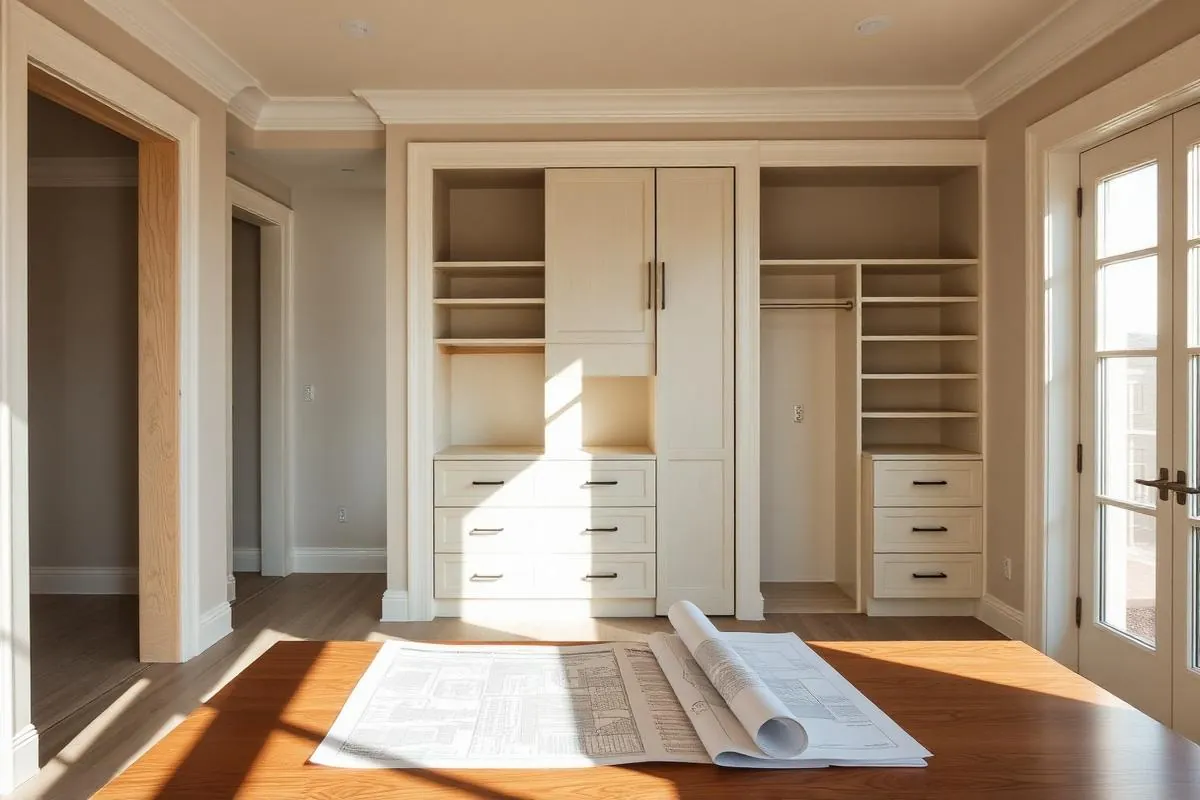
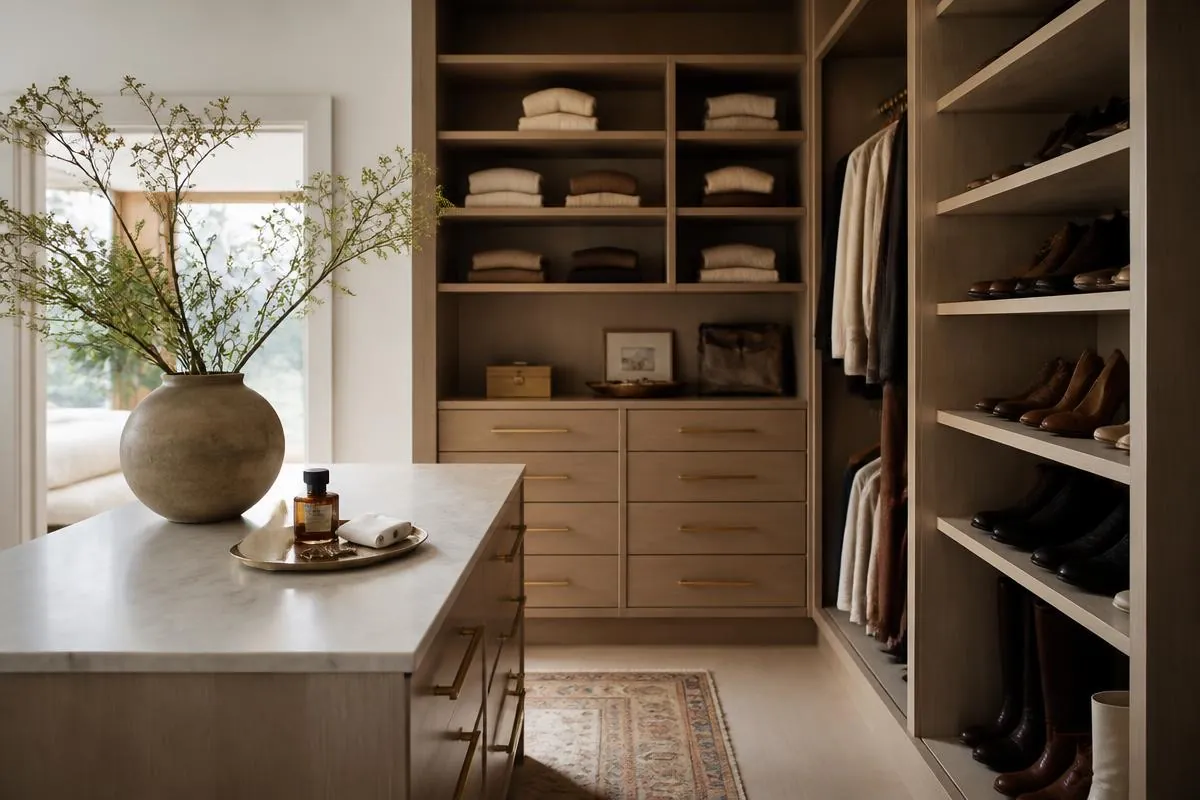
A designer will visit your home, measure the space and show you what's possible, with no obligation and no sales pressure.