
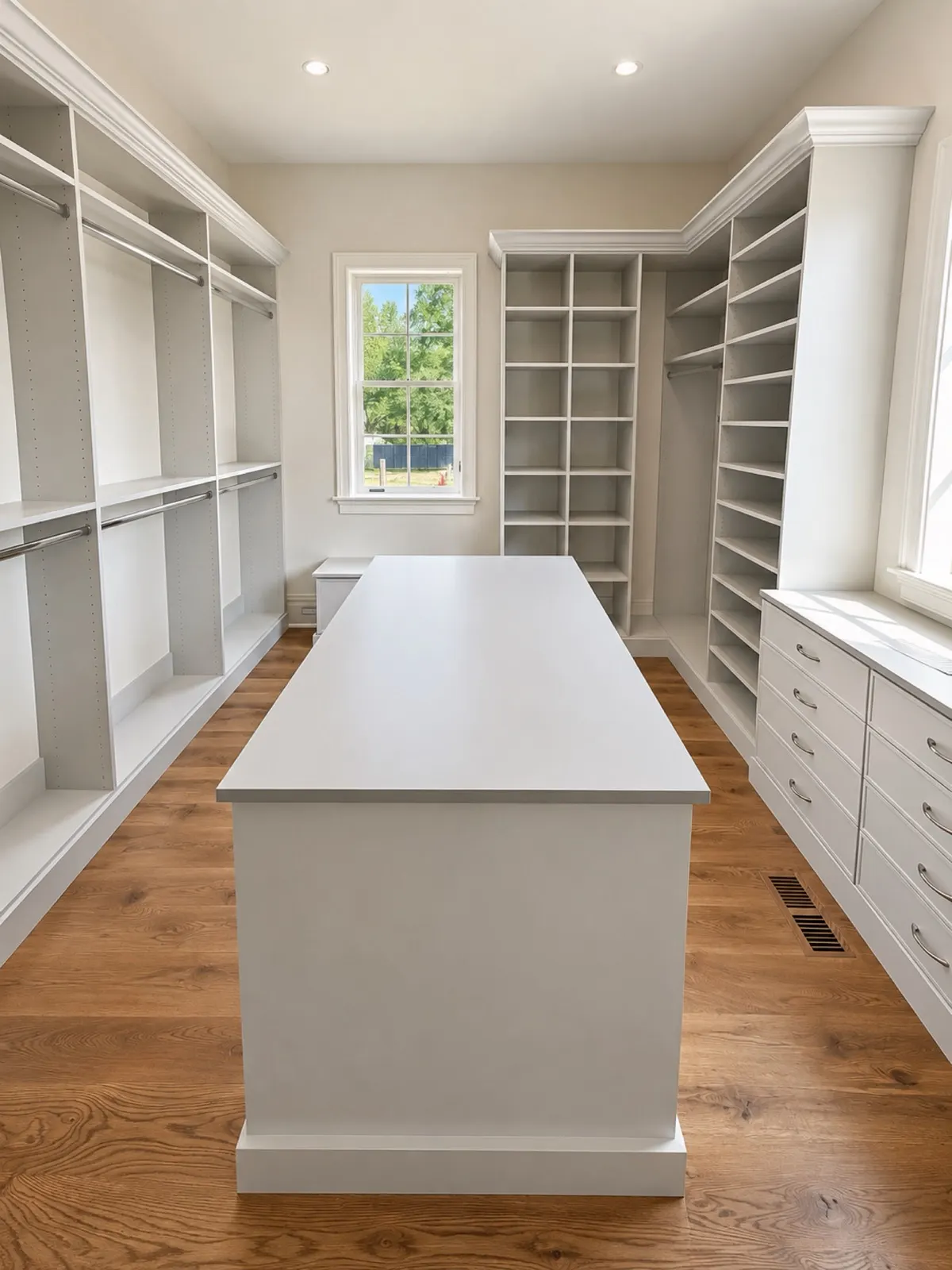
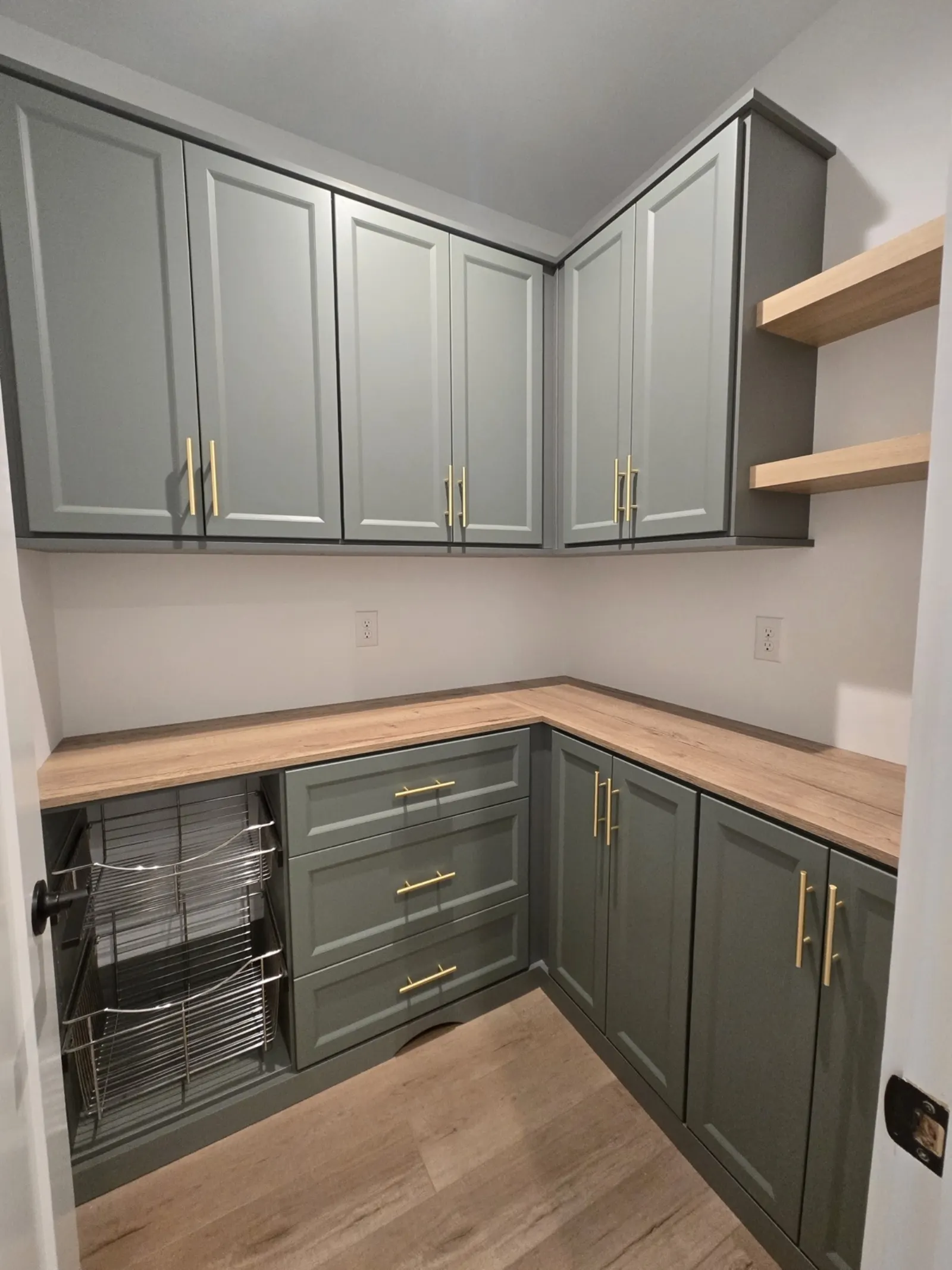
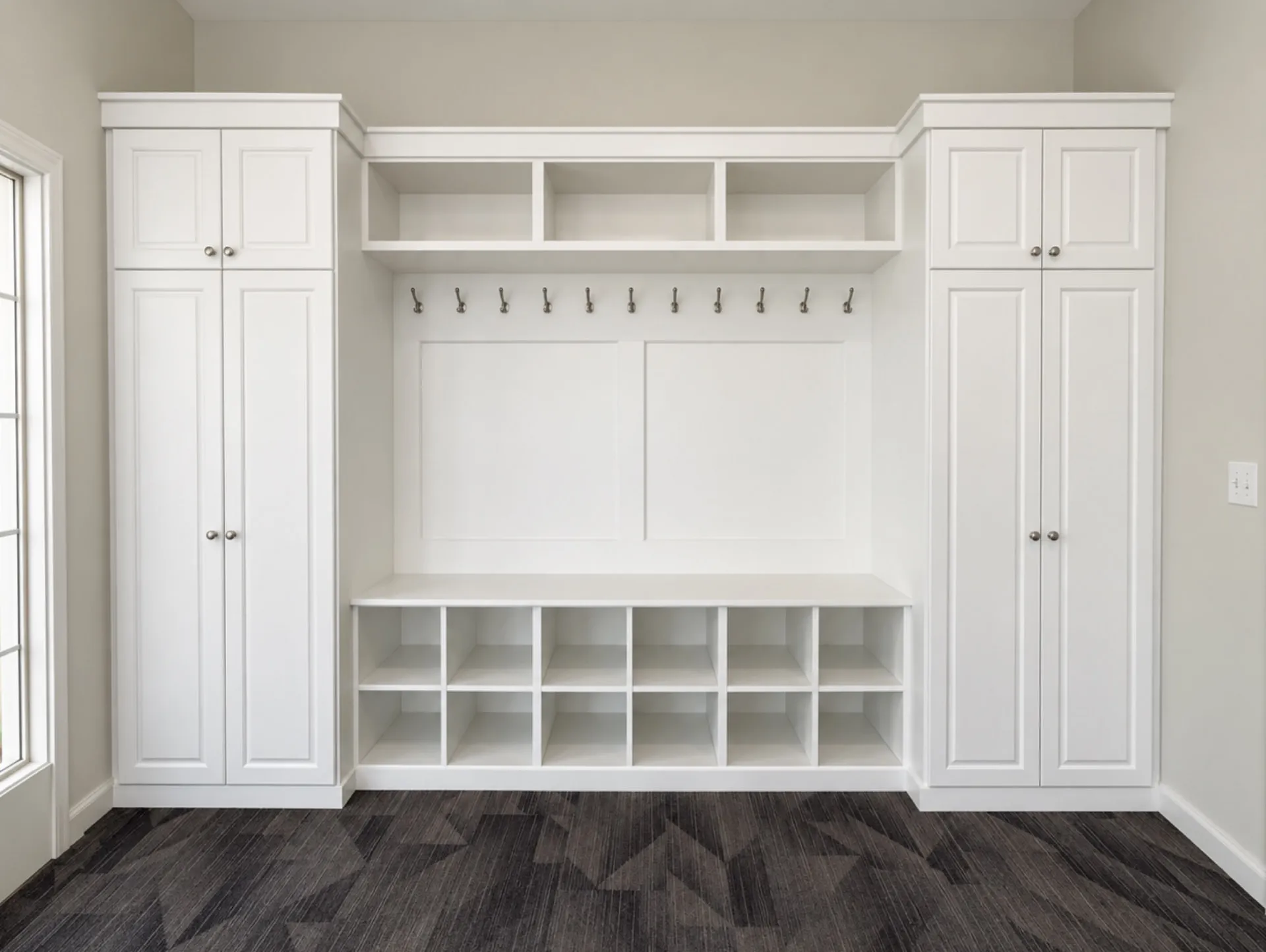
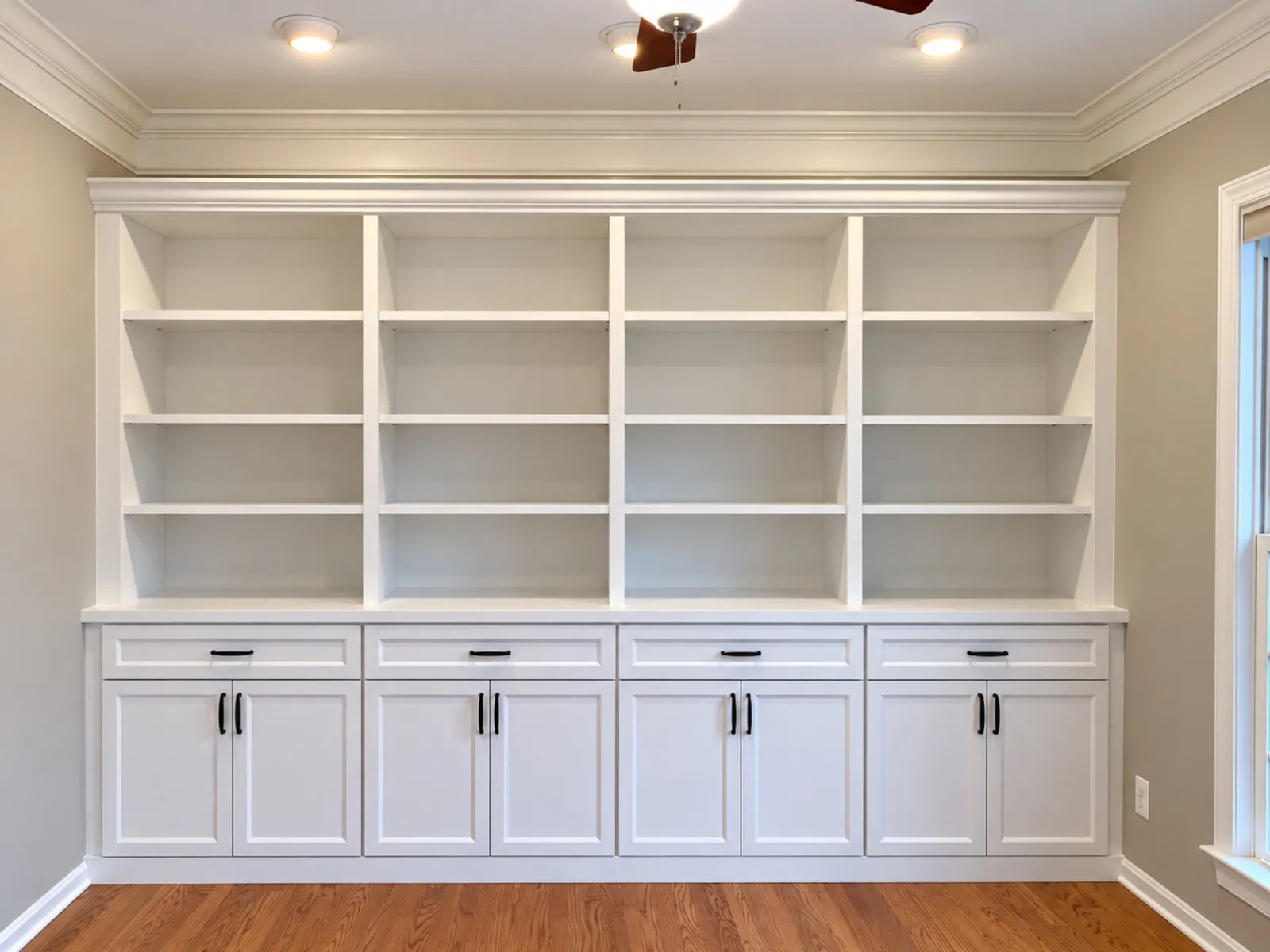

Closets · October 26, 2026
By Laura Bryan, Vice President · Meet the team
What Makes a High-End Custom Closet Actually Feel High-End? It's Not What You Think
Your closet holds everything it's supposed to hold. The shelves are there, the hanging rods are in place, and nothing is technically on the floor. But every time you open the door, something feels slightly off, and you can't quite name why.
That feeling has a source. And it's rarely about storage capacity.
High-end closet design isn't measured in square footage or the number of drawers you have. It lives in the details you interact with every single day: the weight of a drawer pull, the silence of a closing drawer, the way light catches a glass front at 7 am when you're getting dressed. When those details are right, getting ready feels effortless. When they're wrong, the space works against you without ever announcing why.
Key Takeaways
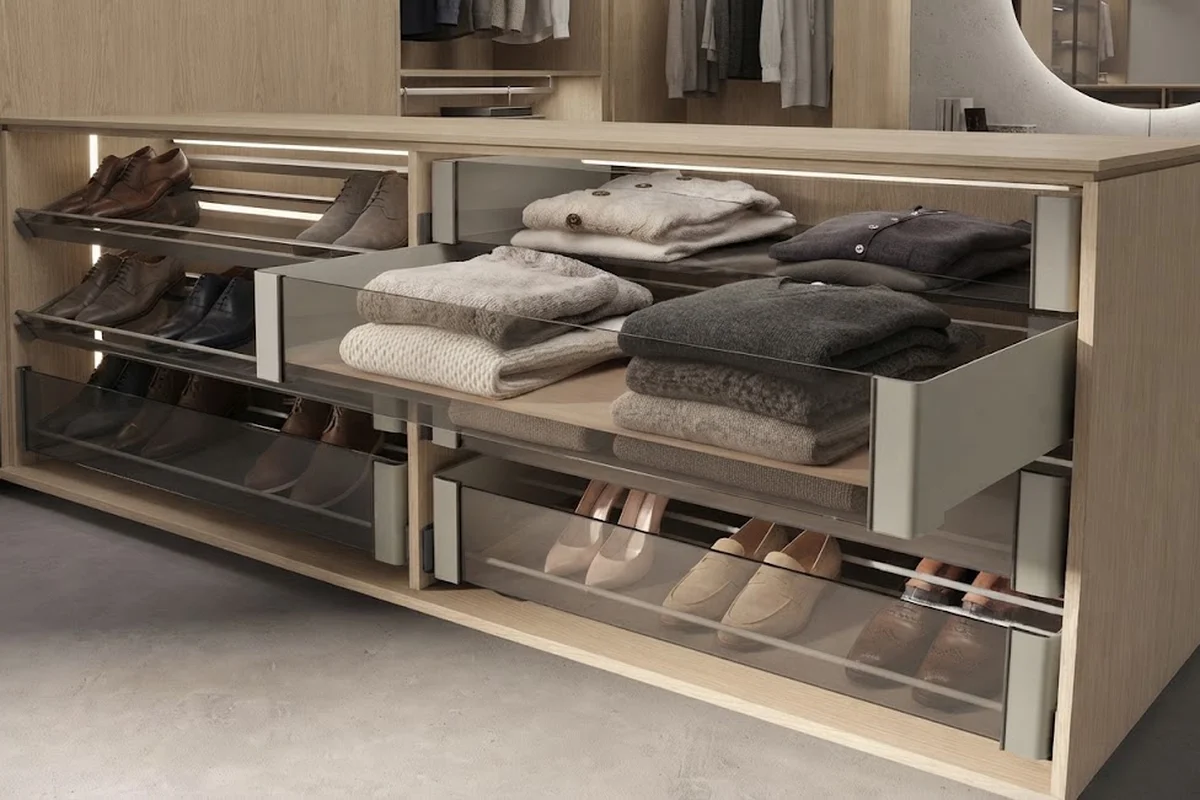
Glass-front drawer construction creates visual organization that reduces decision time during your morning routine by letting you see everything without opening a single drawer.
Soft-close drawer mechanisms aren't a luxury add-on. They're a structural signal: drawers that close quietly stay aligned longer and protect both the contents and the hardware.
A dressing room designed around your actual routine, not a catalog layout, eliminates the friction points that make getting ready feel harder than it should.
Finish, hardware, and material consistency across a closet system is what separates a space that looks designed from one that looks assembled.
Diplomat Closet Design builds every closet from scratch, which means the details that drive daily function are deliberate choices, not defaults.
Why Does a Closet Feel Cheap Even When It's Organized?
The surface answer is "cheap materials." The real answer is more specific.
A closet feels cheap when its components do their jobs independently of one another. The shelves hold things. The drawers open. The rods support the hangers. But nothing is in conversation with anything else. The finish on the casing doesn't match the finish on the hardware. The drawer slides have a little wobble that you've learned to compensate for. The interior lighting hits the back wall instead of the contents.
Each small misalignment is invisible on its own. Together, they create a space that feels like it was selected from a catalog rather than designed for your life.
This is the root cause of why generic storage systems can't fix it: they're built to a price point, not to a standard. The components are interchangeable because interchangeability is the product. A custom closet built from scratch operates on a different logic entirely. Every element is chosen because it belongs there, not because it was available.
If you've been wondering why a well-organized closet still doesn't feel right, this is almost always why.
What Does Glass-Front Drawer Construction Actually Change?
Glass-front drawers are a specific design choice with a specific function. A glass-front drawer is a drawer face that uses a framed or frameless glass panel in place of a solid front, making the contents visible without opening the drawer.
The functional benefit is immediate: you can see your folded sweaters, accessories, jewelry trays, or folded denim at a glance. No opening, no rummaging, no refolding what you disturbed. In a morning routine where time is compressed, that's a real reduction in friction.
But the visual benefit is equally important in a dressing room context. Glass fronts create a sense of curated display. Your belongings stop being stored and start being presented. That shift in perception changes how you interact with the space entirely.
Consider a typical case: a primary closet with a dedicated accessories section. With solid drawer fronts, the owner opens three drawers before finding the right scarf. With glass fronts, the right drawer is identified before a hand is raised. The difference in time is seconds. The difference in experience is the entire morning.
There's a construction detail worth understanding here. Quality glass-front drawers use tempered glass set in a properly engineered frame, with hardware scaled to the panel's weight. A glass front in a poorly constructed drawer box will eventually crack or stick. The glass reveals the problem immediately because you can see the misalignment. This is why glass fronts are only worth doing when the underlying construction is furniture-grade. The transparency that makes them beautiful also makes every flaw visible.
You can explore unique integrations for custom closet design that go beyond standard drawer options, including specialty hardware and material combinations that change how a space functions day-to-day.
Why Does Drawer Smoothness Matter More Than Drawer Count?
Here's the contrarian claim, stated plainly: more drawers don't make a closet more functional. Better drawers do.
A closet with eight drawers on undermount soft-close slides will serve you better than a closet with fourteen drawers on standard side-mount hardware. The reason is both mechanical and behavioral.
Soft-close drawer mechanisms work through a hydraulic dampening system that decelerates the drawer in the final inch of travel. The drawer doesn't slam. It doesn't bounce. It closes with a quiet, definitive click. The mechanism also keeps the drawer face flush and properly aligned over time, because the closing force is controlled rather than variable.
The behavioral side matters just as much. When drawers close smoothly and quietly, you close them. When drawers require a firm push, stick slightly, or make noise, you start leaving them open. An open drawer is a small disorder that compounds. You stop seeing it as a problem and start seeing it as the normal state of the space.
A drawer you close every time without thinking is doing more organizational work than a drawer you manage.
Diplomat Closet Design specifies drawer hardware that matches the weight and frequency of use for each drawer in the system. A heavy jewelry drawer gets different hardware than a lightweight scarf drawer. That specificity is what furniture-grade construction actually means in practice.
If you're weighing the difference between a custom build and a kit system on this point specifically, the comparison between custom closets and DIY closet kits covers the hardware and construction differences in real detail.
How Should a Dressing Room Be Designed Around Visual Organization?
Visual organization is a design principle, not a storage strategy. Visual organization means arranging a space so that the location of every item is legible at a glance, without labels, memory, or searching.
Most closets fail this test because they were designed around storage volume rather than visual logic. Everything fits, but nothing is easy to find without effort. A well-designed dressing room inverts this: storage capacity is secondary to sight lines, grouping logic, and the visual weight of each zone.
In practice, this means a few specific things:
Hanging sections are grouped by length and frequency of use, not by category alone
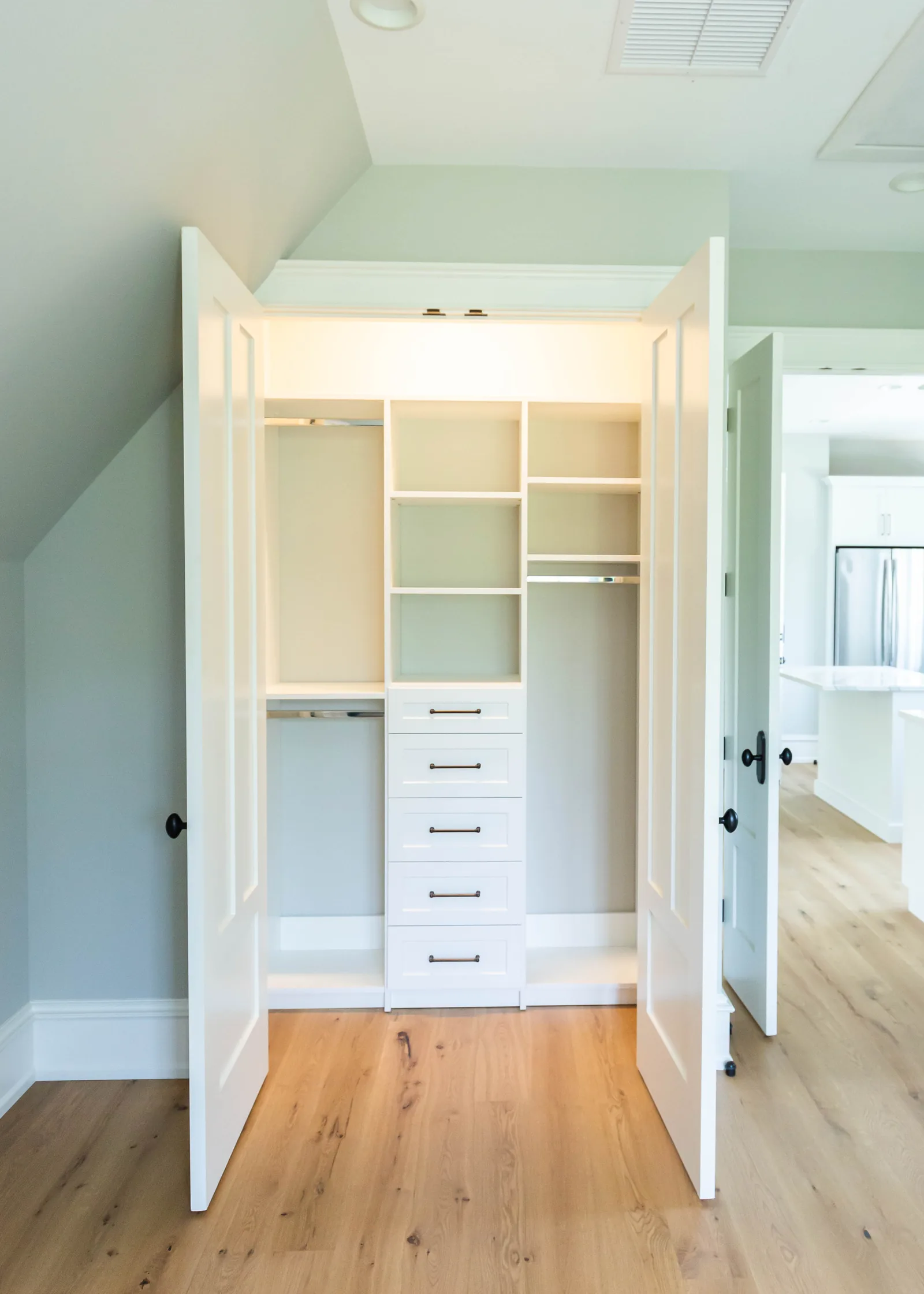
Drawer placement follows the body's natural reach zones (most-used items at waist height, least-used above or below)
Open shelving for bags, shoes, or folded items is positioned where natural light or task lighting makes the contents clearly visible
Glass fronts, open cubbies, and pull-out trays are used for items you need to identify quickly; solid fronts are reserved for items you access less often
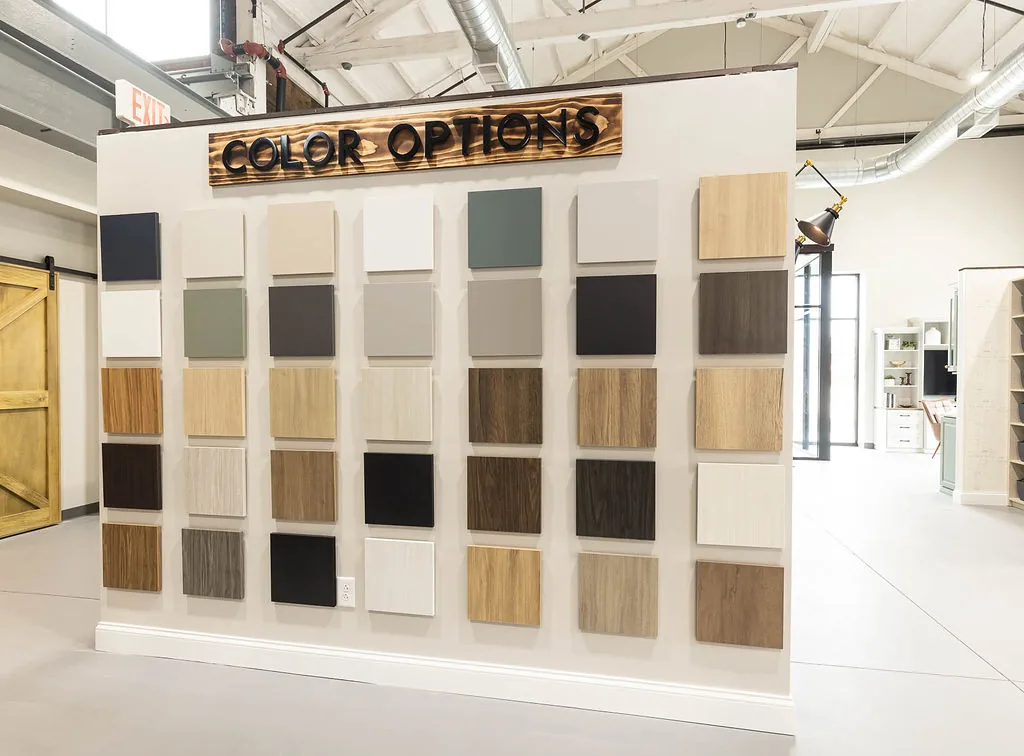
The choice of finish reinforces all of this. A lighter interior finish reflects light back into the space, making contents easier to see. A darker finish creates drama but requires better lighting to maintain visual clarity. Neither is wrong, but the choice has functional consequences that most catalog systems never address.
If you're thinking about how color and finish interact with function in a dressing room, selecting the best closet colors with a custom closet builder will walk you through the decisions behind those choices.
If you'd like to see what a dressing room tailored to your actual routine could look like, Diplomat Closet Design offers complimentary design consultations with 3D renderings, so you can evaluate the design before anything is built. It's worth having that conversation before you commit to a layout.
How Does High-End Compare to Standard When You Break It Down?
| Feature | Standard/Generic System | Custom High-End Build |
|---|---|---|
| Drawer construction | Particleboard box, side-mount slides | Furniture-grade box, undermount soft-close |
| Drawer fronts | Solid, uniform | Glass-front options scaled to use |
| Finish consistency | Catalog-matched, limited options | Specified for your space and existing finishes |
| Hardware | Standard pulls, fixed sizing | Scaled to drawer weight and use frequency |
| Layout logic | Pre-configured zones | Designed around your actual routine |
| Visual organization | Storage-first | Sight-line and legibility-first |
| Lighting integration | Rarely included | Planned as part of the design |
The table makes one thing clear: the differences aren't cosmetic. They're structural and behavioral. The gap between a standard system and a custom build shows up in how the space feels to use every single morning, not just how it photographs.
Who Gets the Most from This Level of Detail?
This kind of investment in construction quality and visual design makes the most sense when the closet is a primary dressing space used daily by one or two people with a real wardrobe to manage. It's the right fit when you've already tried organizing a standard closet and found that the problem isn't your habits, it's the design.
It's also worth noting what this approach doesn't promise. A beautifully built dressing room won't organize itself. If the initial design doesn't reflect how you actually get dressed, the best hardware in the world won't compensate. This is why the design consultation process matters as much as the materials. Diplomat Closet Design's in-home consultations are built around understanding your routine first, then designing around it.
For a look at how walk-in closet systems near you are evaluated and specified, that resource covers what to look for in both the design process and the finished product.
A common follow-up question at this stage: What about lighting? The answer is that lighting is inseparable from visual organization. A perfectly designed closet with poor lighting defeats the purpose of glass fronts entirely. Upgrading closet lighting is one of the highest-return changes you can make to an existing space, and it's always part of Diplomat Closet Design's planning process.
The One Thing That Separates a Closet You Tolerate from One You Love
A closet you love isn't the one with the most storage. It's the one where nothing requires a workaround.
Every workaround you've built into your current routine, the drawer you leave open because it sticks, the shelf you avoid because the lighting is bad, the section you never use because it's the wrong height, is a design failure that you've absorbed into your day. You've stopped noticing it because you've made peace with it.
The finish is the first thing you see and the last thing you forget. But the drawer mechanism is what you feel every single morning, and that feeling accumulates.
When you're ready to stop tolerating a closet that almost works and start using one built around your actual life, Diplomat Closet Design is the right place to begin. Serving homeowners across Southeastern Pennsylvania, Delaware, and the Jersey Shore area, every project begins with a complimentary in-home design consultation and ends with a space you didn't know was possible until you saw the 3D rendering. Schedule your consultation and find out what your closet could actually be.
Frequently Asked Questions
How long does a custom closet installation typically take, from the first consultation to the finished space?
The timeline varies with the project's size and complexity, but most residential custom closet installations progress from initial design consultation to installation within a matter of weeks, not months. The design phase, including 3D renderings and material selection, happens first, so you're approving a detailed visual before anything is ordered or built.
Are glass-front drawers hard to keep looking clean?
Tempered glass fronts are no harder to maintain than any other glass surface in your home. A quick wipe keeps them clear. The more relevant question is whether the interior of the drawer is organized enough to look good when visible, which is actually a design conversation about what goes in glass-front drawers versus solid-front drawers.
Can a custom closet be designed for a smaller primary bedroom with limited square footage?
Yes, and a smaller space often benefits more from custom design than a large one does. When square footage is limited, every inch of layout logic matters more, not less. A custom design can use vertical space, corner configurations, and zone-specific storage in ways that a standard kit system physically can't accommodate.
What's the difference between furniture-grade construction and what I'd find at a big-box store?
Furniture-grade construction uses materials and joinery methods designed for long-term structural integrity under daily use, rather than materials optimized for a retail price point. The practical difference shows up in drawer boxes that don't flex, finishes that don't chip at edges, and hardware that maintains its function after years of repeated use.
Do I need to have my closet emptied before the design consultation?
No. An in-home consultation is most useful when the designer can see how you actually use the space, including what's in it, how it's currently organized, and where the friction points are. A full closet tells the designer more about your real needs than an empty one does.
Is a custom closet a good investment if I'm planning to sell my home in a few years?
A well-designed primary closet is consistently cited by real estate professionals as a feature that buyers notice and remember, particularly in the mid-to-upper price range. Beyond resale value, you'll use the space every day until you sell, which means the investment pays off in daily functionality long before it pays off in home value.
What makes Diplomat Closet Design different from a national closet franchise?
Diplomat Closet Design designs every project from scratch rather than selecting from a catalog of pre-configured components. The design process starts with your space, your routine, and your preferences, not with what's available in a product line. As a locally owned company serving Southeastern PA, Delaware, and the Jersey Shore area, the relationship is direct: you work with the same people from consultation through installation.
About the Author
Laura Bryan is Vice President of Diplomat Closet Design, where she brings nearly two decades of design experience to custom storage and organizational solutions across primary closets, dressing rooms, home offices, mudrooms, and more. Her background includes senior design leadership at Toll Brothers, two Synergy Awards for design excellence, and recognition as a 40 Under 40 honoree in the woodworking industry. She is known for listening carefully to how clients actually live and translating that into spaces that are both beautiful and genuinely functional.
Written by the design team at Diplomat Closet Design, Downingtown, PA. Questions about your own space? Call 610-431-3500.
Where we build.
We design and install custom storage across Southeastern Pennsylvania, Delaware and New Jersey.
Keep reading.
Or browse everything we've written on closets.
Begin your project
Let's start with a conversation.
A designer will visit your home, measure the space and show you what's possible, with no obligation and no sales pressure.