

Closets · August 8, 2026
By the Diplomat Closet Design team · Meet the team
Nursery Closet Design That Grows With Your Baby
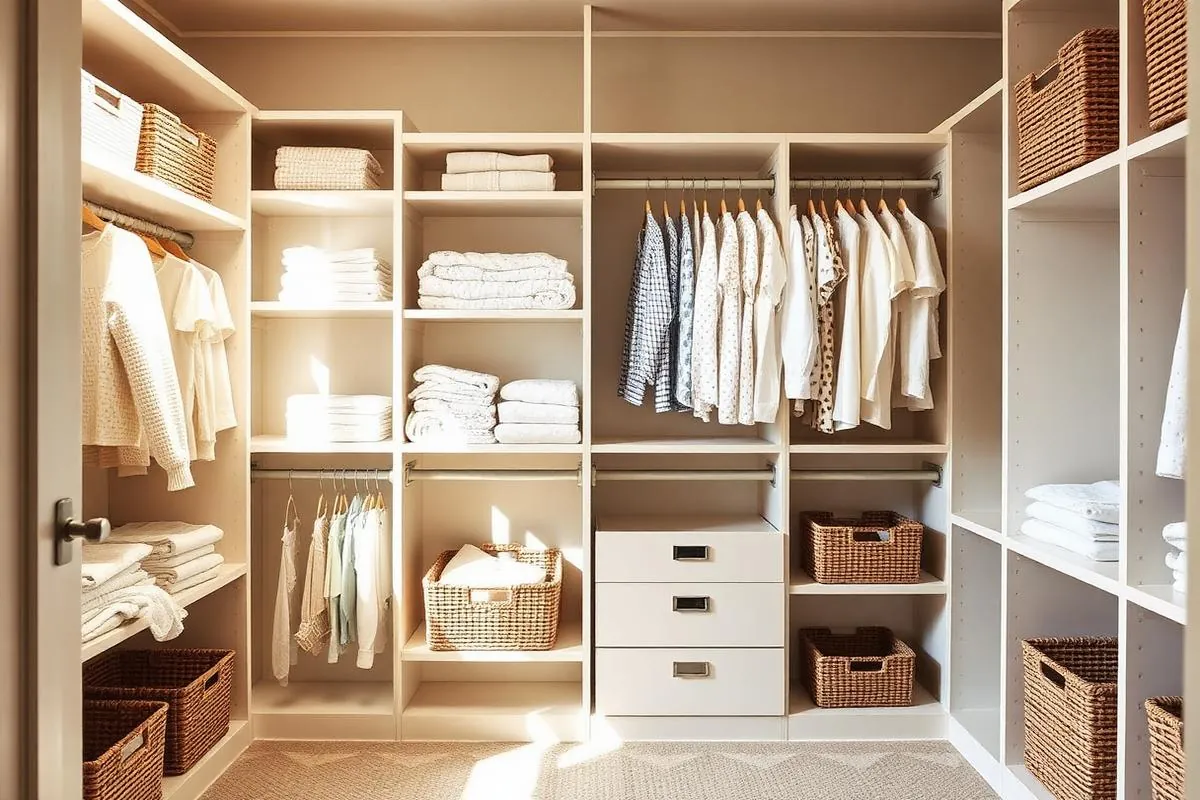
A nursery closet gets used more than almost any other storage in the house, and it changes faster than any of it. The system that works for a newborn, with stacks of tiny folded clothes and a wall of diapers, is not the system a four-year-old needs. Designing for both from the start is the whole trick.
Start With Two Rod Heights, Not One
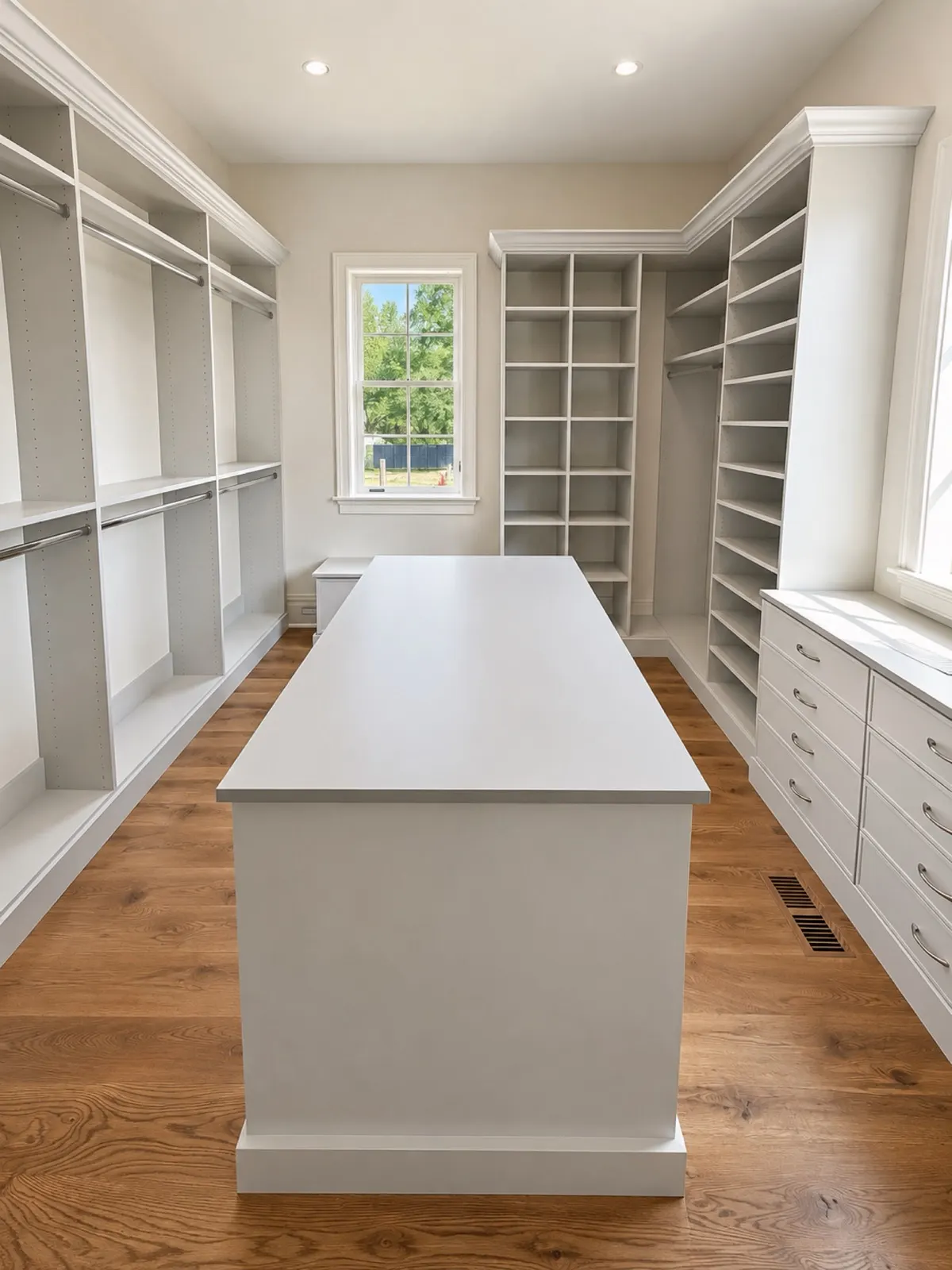
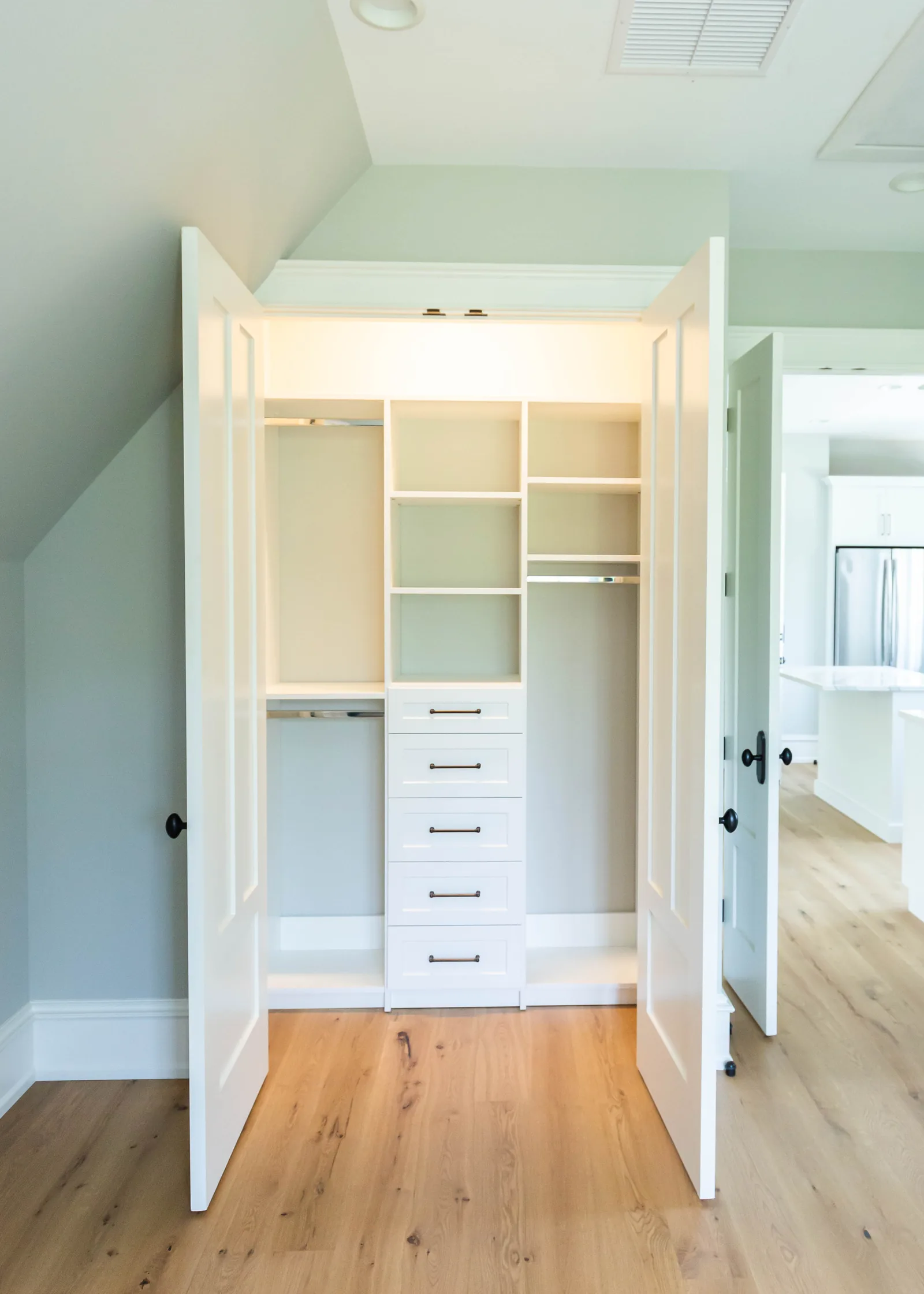
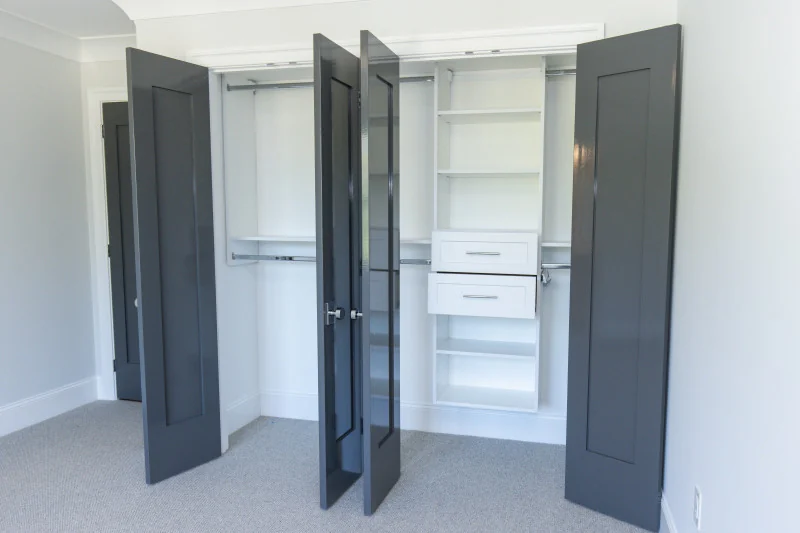
Standard closets put a single rod at roughly sixty-six inches. Baby clothes are short, so that leaves a cavern of dead air underneath. A double-hang setup doubles usable capacity immediately, and when the lower rod sits around thirty inches off the floor, a toddler can eventually reach their own clothes, which is the beginning of getting dressed without help.
Adjustable shelving matters just as much. Pins and tracks let you drop a shelf, move a rod, or convert hanging space to folded storage in an afternoon rather than living with the layout you chose the month before the baby arrived.
Build the Changing and Gear Zone Into the Closet
A counter-height surface inside or beside the closet keeps changing supplies at hand and frees floor space in a small nursery.
Shallow drawers hold diapers, wipes, and creams far better than deep bins, because nothing hides at the back.
Labeled baskets sized by clothing stage keep the next size up ready and the outgrown size out of rotation.
A hamper cubby built into the run means laundry lands in one place instead of on the floor.
Plan the Handoff to the Toddler Years
Around age three the closet job changes: fewer folded stacks, more hanging, more shoes, and a strong interest in doing it independently. If the system was built with adjustable components, that transition is a Saturday of moving shelves rather than a replacement. Lower the top rod, add a shoe shelf at floor level, and convert one bank of baskets to open cubbies the child can actually use. The same logic carries into a kid-friendly closet later on.
Safety Details Worth Insisting On
Anchor everything to studs. Soft-close hardware protects small fingers. Keep the heaviest items on low shelves, not overhead. And if the nursery is above grade with limited light, integrated LED lighting inside the closet means you are not fumbling for a switch at three in the morning.
Frequently Asked Questions
How small can a nursery closet be and still work?
A standard reach-in of about six feet wide and two feet deep is plenty when it is designed properly. The gain comes from double-hanging, adding drawers instead of relying on the floor, and using the full height of the wall rather than stopping at a single shelf.
Should I build in a dresser or keep it freestanding?
Built-in drawers inside the closet free up nursery floor space and remove a tip hazard, which is why many families prefer them. A freestanding dresser is easier to repurpose later, so it comes down to how much floor area the room can spare.
When is the best time to design a nursery closet?
Most families plan it in the second trimester, which leaves comfortable room for design, approval, and installation before the due date. Our process page lays out the stages and typical timing.
Planning a nursery? Diplomat Closet Design offers complimentary in-home consultations across Southeastern Pennsylvania, Delaware, and the Jersey Shore area.
Written by the design team at Diplomat Closet Design, Downingtown, PA. Questions about your own space? Call 610-431-3500.
Where we build.
We design and install custom storage across Southeastern Pennsylvania, Delaware and New Jersey.
Keep reading.
Or browse everything we've written on closets.
Begin your project
Let's start with a conversation.
A designer will visit your home, measure the space and show you what's possible, with no obligation and no sales pressure.