

Have you ever stood in your closet (or even that spare room that goes unused for most of the year) and wondered whether it truly has enough space to create the walk-in closet you’ve been envisioning? It’s a question that often stops homeowners before they even explore the possibilities.
The truth is, with thoughtful planning, the right dimensions, and customized storage features, even modest closets or spare rooms can become beautifully organized walk-in closets. This guide will walk you through minimum space requirements, ideal dimensions, layout options, and practical considerations to help you determine what’s possible in your home.
Minimum Square Footage Requirements for Walk-In Closet Layouts
The layout you choose for your custom built-in storage solution will have the biggest impact on how much space you need. While there’s flexibility in design, certain minimum dimensions ensure comfort and functionality.
Single-Sided Walk-In Closet
A single-sided layout features storage along one wall with a walkway in front. This is often the most space-efficient walk-in design and works well in smaller closets or converted spaces.
- Minimum width: 4 feet
- Minimum depth: 4 feet
- Recommended size: 4 feet by 6-8 feet
Here’s why: Hanging clothes require approximately 24 inches of depth. You’ll also need at least 24 inches of clear walkway space to move comfortably. Together, that brings you to a minimum of 4 feet in width.
This layout is ideal for homeowners who want the feel of a walk-in closet without sacrificing too much space.
Double-Sided Walk-In Closet
Double-sided closets have storage on both walls with a central walkway. This layout significantly increases storage capacity and is common in primary suites.
- Minimum width: 6-7 feet
- Minimum depth: 6-8 feet
Two rows of hanging space (24 inches deep each) plus a walkway of at least 30-36 inches require roughly 6-7 feet of width. While 6 feet may technically work, 7 feet provides more comfortable movement.
This layout is especially beneficial for couples sharing a closet, as it allows clear separation of storage areas.
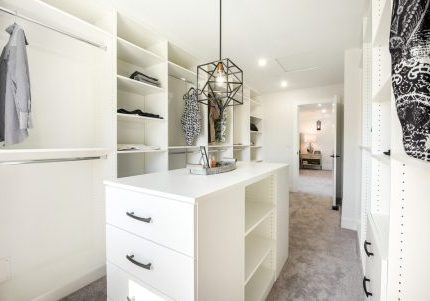
A Walk-In Closet With an Island
If you’ve ever admired walk-in closets with a central island for drawers or accessory storage, you’ll need additional square footage.
- Minimum width: 10 feet
- Minimum depth: 10 feet
An island typically measures 2-3 feet deep and 3-4 feet long. To maintain comfortable walkways (36 inches on all sides), the closet must be significantly larger than a standard double-sided design.
Island layouts are best suited for spacious primary suites where storage doubles as a design statement.
Ideal Dimensions for Hanging Rods, Shelving, Drawers & Walkways
Getting the dimensions right is essential for functionality and long-term satisfaction.
Hanging Rod Heights
- Single rod for long garments: 60-66 inches high
- Double rods for shirts and pants (upper rod): 80-84 inches high
- Double rods for shirts and pants (lower rod): 40-42 inches high
Double hanging rods are an efficient way to double your hanging capacity without increasing square footage.
Shelf Depth & Spacing
- Shelf depth: 12-16 inches for folded clothing
- Vertical spacing: 10-12 inches between shelves
Adjustable shelving is especially valuable, allowing you to adapt the space as your storage needs change.
Drawer Dimensions
- Drawer depth: 14-18 inches
- Drawer height: 6-8 inches for smaller items, 10-12 inches for bulkier clothing
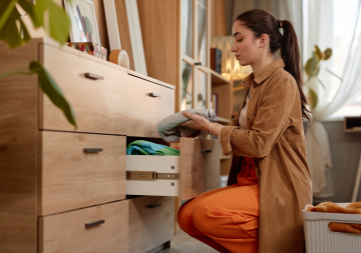
Drawers are ideal for accessories, undergarments, and folded garments you’d prefer to keep dust-free.
Walkway Space
- Minimum clearance: 24 inches (tight but workable)
- Comfortable clearance: 30-36 inches
A comfortable walkway ensures you can bend, turn, and open drawers without feeling cramped.
The Impact of Ceiling Height & Vertical Storage
Ceiling height plays a significant role in determining how much storage your walk-in closet can accommodate.
Most homes have 8-foot ceilings, but even in standard-height rooms, vertical storage can dramatically increase capacity. Tall shelving, stacked hanging rods, and upper cabinets for seasonal storage help you take advantage of every inch.
In closets with 9- or 10-foot ceilings, design opportunities expand further. You can incorporate:
- Overhead cabinets for off-season items
- Decorative crown molding for a polished look
- Tall shoe towers or display shelving
Vertical storage allows you to keep everyday essentials at eye level while utilizing higher spaces for less frequently used items, such as seasonal clothes.
Design Considerations for Small vs. Spacious Closets
The size of your closet will influence both the layout and design of your custom built-in storage solution.
Smaller Closets
In smaller spaces, efficiency is key. For smaller layouts:
- Focus on double hanging rods.
- Incorporate built-in drawers.
- Use sliding or pocket doors to save space.
- Maximize corners with angled shelving.
Spacious Closets
Larger bedrooms allow for more expansive walk-in closets with thoughtful zoning. You might dedicate separate sections for:
- His-and-hers storage
- Shoes and accessories
- Jewelry drawers
- Dressing areas with seating
Spacious designs also allow room for islands, vanities, and decorative lighting that elevate the closet beyond storage into a personal retreat.
Creative Ways to Maximize Limited Square Footage
If your available space is limited, a thoughtful design of your built-in closet solution can make a remarkable difference.
- Utilize Corners Effectively: Corner shelving, wraparound rods, and custom-built units prevent wasted space and maintain flow.
- Go Vertical: Stacked storage, upper cabinets, and taller shelving instantly increase capacity without expanding the footprint.
- Incorporate Multi-Functional Features: Built-in hampers, pull-out accessory trays, and adjustable racks reduce clutter while keeping everything accessible.
- Choose Strategic Lighting: Proper lighting enhances both function and perception. For example, LED strip lighting beneath shelves and overhead fixtures makes small closets feel larger and more open.
- Customize to Your Wardrobe: Designing around your actual clothing collection, rather than a generic layout, ensures the space works efficiently.
Transform Your Closet With Diplomat Closet Design
Homeowners throughout Southern Pennsylvania and Delaware don’t have to guess whether their space is large enough to support a beautiful, functional walk-in closet. We specialize in creating expertly crafted custom storage solutions tailored to each home and lifestyle.
With years of experience designing walk-in closet systems that balance beauty and functionality, our team understands how to maximize both modest and expansive spaces. Whether you’re converting a spare bedroom into a closet or upgrading an existing closet, our redesign process will make sure you receive a personalized layout that aligns with your wardrobe, daily routine, and aesthetic preferences.
Schedule a design consultation with Diplomat Closet Design today to determine the ideal layout for your space and take the first step toward the organized, stylish closet you’ve been dreaming about.